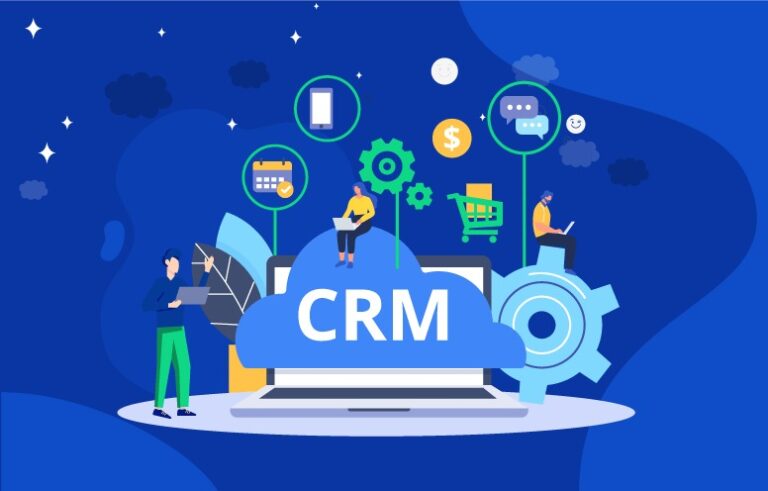
Discover the best CRM platforms for high-growth startups in the United States in 2026. Compare top CRM software, pricing, automation features, AI capabilities, and scalability. Learn how startups use CRM systems to grow revenue faster with real case studies, expert insights, and proven strategies.
Why CRM Platforms Are the Growth Engine for Startups in 2026
In 2026, customer relationships determine whether a startup becomes a unicorn or disappears in a crowded market. Founders in the United States are realizing that spreadsheets, scattered emails, and manual follow-ups can no longer support fast scaling.
This is where Customer Relationship Management (CRM) platforms become the backbone of high-growth startups.
A modern CRM does far more than store contacts. It helps startups:
- Track every interaction with potential customers
- Automate sales pipelines and follow-ups
- Use AI to predict customer behavior
- Integrate marketing, sales, and support
- Increase conversions and lifetime customer value
According to research published by (https://www.statista.com), companies that implement CRM systems increase sales productivity by more than 30%. Another report by (https://www.mckinsey.com) shows that startups using automation-driven CRM tools grow revenue 2.5 times faster than those without structured systems.
For startups targeting Tier 1 markets like the United States, Canada, UK, and Australia, choosing the right CRM platform can be the difference between chaotic growth and predictable revenue.
This comprehensive guide explores the best CRM platforms for high-growth startups in the United States in 2026, including real-world examples, expert insights, comparison tables, implementation guides, and proven strategies used by fast-scaling companies.
What Makes a CRM Perfect for High-Growth Startups?
Not every CRM works for startups. Large enterprise systems often come with complex implementations and high costs.
Startups require platforms that are flexible, scalable, automation-driven, and affordable.
Here are the critical features founders should evaluate.
1. AI-Driven Automation
The best CRMs in 2026 integrate artificial intelligence for lead scoring, email personalization, and predictive sales analytics.
Platforms like (https://www.salesforce.com) and (https://www.hubspot.com) now use machine learning to analyze customer behavior and identify high-conversion opportunities.
2. Scalability
Startups may grow from 100 leads to 100,000 customers within a few years. A CRM must scale without requiring a complete migration.
3. Seamless Integrations
Modern startups rely on tools like Stripe, Slack, and AWS.
CRM systems should easily connect with platforms such as:
4. Advanced Analytics
Data-driven startups rely heavily on dashboards and revenue insights.
Top CRMs include:
- Sales forecasting
- Customer segmentation
- Pipeline tracking
5. Marketing Automation
Marketing and sales must work together. Modern CRM systems unify:
- Email campaigns
- Landing pages
- Lead nurturing
This creates higher conversion rates and better ROI.
Comparison Table: Best CRM Platforms for Startups in 2026
The following table compares leading CRM platforms used by fast-growing startups in the United States.
| CRM Platform | Best For | Key Features | Starting Price | Startup Scalability |
|---|---|---|---|---|
| HubSpot CRM | All-in-one marketing and sales automation | AI lead scoring, email automation, analytics | Free plan available | Excellent |
| Salesforce Starter | Enterprise-grade CRM for startups | Custom workflows, AI insights | $25/month | Very high |
| Zoho CRM | Budget-friendly startups | Omnichannel communication | $14/month | High |
| Pipedrive | Sales-focused teams | Visual pipelines, automation | $21/month | High |
| Freshsales | AI-driven lead management | Built-in phone and email | $15/month | High |
| Monday Sales CRM | Workflow automation | Custom dashboards | $10/month | Moderate |
| Close CRM | Inside sales teams | Calling automation | $29/month | High |
This comparison helps founders quickly identify the right platform based on budget, automation, and scalability.
Top CRM Platforms for High-Growth Startups in the United States
1. HubSpot CRM – Best All-in-One Startup CRM
HubSpot remains one of the most popular CRM systems for startups.
Its platform integrates marketing, sales, customer service, and analytics into one ecosystem.
According to insights published by (https://www.forbes.com), startups using HubSpot automation experience up to 40% higher lead conversion rates.
Key Features
- AI-driven lead scoring
- Marketing automation
- Email tracking
- Built-in CMS and landing pages
- Powerful reporting dashboards
Real Startup Example
A SaaS startup in San Francisco scaled from $500k ARR to $4M ARR in 18 months using HubSpot automation to manage inbound leads and automate follow-ups.
The company reduced manual sales tasks by 60%.
2. Salesforce Starter Suite
Salesforce is the most powerful CRM ecosystem globally.
Even startups benefit from its scalable architecture and advanced AI capabilities through Salesforce Einstein.
Insights from (https://www.gartner.com) consistently rank Salesforce as a leader in CRM platforms worldwide.
Key Features
- AI-driven sales predictions
- customizable workflows
- enterprise-grade security
- deep analytics
- massive integration marketplace
Case Study
A fintech startup used Salesforce automation to manage over 1 million customer interactions annually, increasing sales productivity by 38%.
3. Zoho CRM
Zoho CRM is a favorite among startups seeking affordability without sacrificing features.
It includes omnichannel communication such as:
- social media
- phone
- live chat
Why Startups Choose Zoho
- affordable pricing
- powerful automation
- easy integrations
A report on digital business tools by (https://www.techcrunch.com) highlighted Zoho as one of the fastest-growing CRM platforms among startups globally.
4. Pipedrive CRM
Pipedrive focuses heavily on sales pipeline management.
This CRM is designed specifically for sales-driven startup teams.
Key Features
- visual pipeline management
- automation triggers
- activity tracking
- revenue forecasting
Startups love Pipedrive because the interface makes it easy to track deals and predict revenue growth.
5. Freshsales CRM
Freshsales is an AI-powered CRM platform developed by Freshworks.
It includes built-in phone systems, email campaigns, and predictive analytics.
Key Benefits
- AI assistant for sales insights
- automatic lead scoring
- workflow automation
Freshsales is particularly popular among SaaS startups looking to centralize communication.
Step-by-Step Guide: How Startups Should Choose a CRM
Selecting a CRM requires careful planning.
Follow this proven framework used by successful startups.
Step 1: Define Your Sales Process
Before choosing a CRM, document your sales workflow.
Example stages:
- Lead generation
- Lead qualification
- Sales demo
- Proposal
- Closed deal
This ensures the CRM aligns with your business model.
Step 2: Identify Automation Needs
Automation is the biggest growth lever.
Examples include:
- automated follow-up emails
- lead scoring
- task reminders
Automation saves sales teams dozens of hours weekly.
Step 3: Evaluate Integration Ecosystem
A CRM must integrate with your technology stack.
Examples include:
- marketing tools
- payment platforms
- analytics systems
This creates a unified business dashboard.
Step 4: Start Small and Scale
Startups should begin with essential features and upgrade as the company grows.
Many platforms offer free tiers or startup programs.
Case Study: How a Startup Scaled to $10M Using CRM Automation
A SaaS startup in Austin struggled with manual lead tracking.
The company implemented HubSpot CRM to automate its pipeline.
Before CRM
- leads stored in spreadsheets
- slow response times
- missed follow-ups
After CRM Implementation
- automated lead routing
- email nurturing sequences
- AI lead scoring
Within 18 months, the startup:
- increased conversion rates by 45%
- reduced sales cycle by 30%
- reached $10 million annual revenue
This example demonstrates how CRM technology directly impacts startup growth.
Common CRM Mistakes Startups Must Avoid
Even the best CRM software fails if implemented incorrectly.
1. Choosing a CRM That Is Too Complex
Some startups adopt enterprise software that requires months of setup.
This slows growth.
2. Ignoring Sales Automation
Manual follow-ups lead to missed opportunities.
Automation is essential for scale.
3. Poor Data Management
Duplicate contacts and inconsistent data reduce CRM effectiveness.
Regular data cleanup is critical.
4. Lack of Team Training
A CRM only works if the team actively uses it.
Companies should provide onboarding and training sessions.
Expert Insights on CRM Strategy
Growth strategist Emma Richardson shared a key insight in a digital sales interview:
“Startups often underestimate how much CRM automation impacts revenue. A well-implemented CRM doesn’t just organize contacts—it becomes the central intelligence system of the entire company.”
Industry analysts from (https://www.investopedia.com) also emphasize that customer retention is five times cheaper than acquiring new customers, making CRM systems essential for sustainable growth.
Emerging CRM Trends in 2026
CRM technology continues to evolve rapidly.
Here are the most important trends shaping startup growth.
AI Sales Assistants
Modern CRMs use AI to suggest the best time to contact leads and recommend personalized messaging.
Predictive Customer Insights
Machine learning models analyze customer behavior to predict churn and buying intent.
Voice and Chat CRM
Many platforms now integrate voice assistants and chat automation.
Unified Revenue Platforms
CRM tools are merging sales, marketing, and financial insights into a single system.
This gives founders a real-time view of revenue growth.
Questions and Answers About CRM for Startups
What CRM do most startups use?
Most startups use HubSpot, Salesforce, or Zoho CRM because these platforms provide scalable automation and strong integrations.
Is CRM necessary for early-stage startups?
Yes. Even early-stage startups benefit from CRM systems because they prevent lost leads and improve sales organization.
What is the best free CRM?
HubSpot CRM is widely considered the best free CRM because it includes marketing, sales, and analytics tools.
How does CRM increase revenue?
CRM systems increase revenue by:
- improving lead conversion
- automating follow-ups
- tracking sales pipelines
- analyzing customer behavior
Final Thoughts: Choosing the Right CRM for Startup Growth
High-growth startups in the United States face intense competition in 2026.
Without a powerful CRM system, it becomes difficult to manage leads, track opportunities, and maintain strong customer relationships.
The best CRM platforms help startups:
- automate sales pipelines
- analyze customer behavior
- scale revenue faster
Whether a startup chooses HubSpot, Salesforce, Zoho, Pipedrive, or Freshsales, the most important factor is consistent usage and proper implementation.
Founders who build CRM-driven growth systems early gain a major competitive advantage.
As digital markets become more competitive, the startups that win will be those that combine customer intelligence, automation, and data-driven decision making.
A well-chosen CRM platform is no longer optional—it is the central engine of startup growth.

Eunflex Group is a trusted source for in-depth analysis and expert insights on SaaS, CRM platforms, software development, and emerging AI technologies. We are committed to delivering high-quality content that helps professionals stay ahead in the fast-evolving tech landscape.
Support Group Research:
PayPal: [email protected]
MPESA Till Number: 8293548
CONTACT US
EMAIL: [email protected]
WHATSAPP: 254701169398
PHONE NUMBER: 254799471537